Walk through almost any farmers market, street fair, outdoor trade show, or community festival in the United States and you will notice one footprint appearing again and again: 10 feet by 10 feet.
There is a good reason for that.
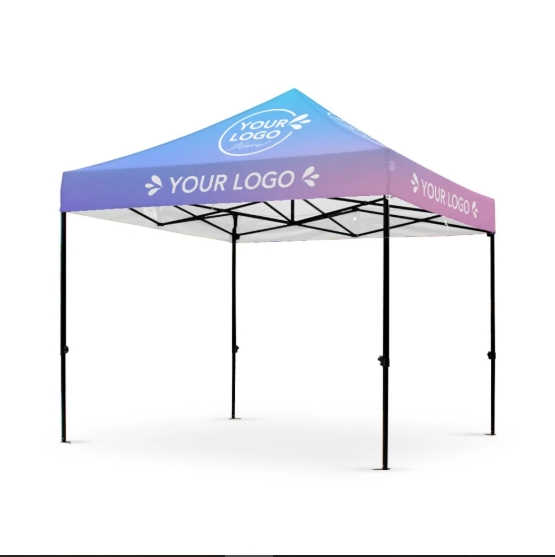
A 10×10 canopy tent gives businesses 100 square feet of usable event space in a compact, familiar format. It is large enough for merchandise, demonstrations, customer conversations, and promotional materials, yet manageable enough for companies that regularly travel between events.
Add professional branding, and those 100 square feet can become something even more valuable: a recognizable temporary storefront.
But not every canopy is designed for the same workload. A company attending twenty markets a year has very different needs from someone buying a shelter for an occasional backyard gathering. For commercial users, frame construction, fabric quality, printing, portability, replacement components, and long-term reliability all deserve serious attention.
Premium equipment costs more upfront. The question is whether paying more for quality creates better value over years of use.
For many event-focused businesses, it can.
Why Did 10×10 Become an Event Favorite?
The popularity of the 10×10 canopy tent starts with simple mathematics.
Ten feet by ten feet provides 100 square feet of footprint. That is enough room for a practical business setup without requiring an enormous amount of venue space.
A retailer can position tables around the perimeter and preserve room for customers. A service company can create a consultation area. A food producer can display packaged goods while leaving room for staff and supplies.
The format is also familiar to event organizers, although businesses should always confirm the specific space and equipment requirements of each venue before attending.
For companies with busy event calendars, consistency is another advantage. Once the team develops an effective 10×10 layout, it can recreate that setup from one event to another.
Employees know where displays belong. Marketing teams know how much signage will fit. Transportation becomes easier to plan.
Essentially, the business gains a repeatable 100-square-foot event formula.
Start With What Happens Under the Roof
Before comparing frames, fabrics, or graphics, decide what the canopy actually needs to accomplish.
A 10×10 pop up canopy used by a jewelry designer may need open browsing space and strong product visibility. A software company attending an outdoor business expo may prioritize demonstrations and lead collection. A bakery might need merchandise displays, packaging supplies, and an efficient transaction area.
Those businesses can use exactly the same footprint very differently.
Start by imagining the customer journey.
What should visitors notice first? Can they approach without walking directly into a table? Is there room to browse without blocking the entrance? Can employees reach inventory without interrupting customer conversations?
The answers determine whether you need open sides, walls, counters, banners, storage solutions, or other compatible accessories.
A well-planned 10×10 space can feel surprisingly comfortable.
A badly planned one can make four adults feel like they have accidentally entered the same phone booth.
At a Farmers Market, Recognition Can Be Half the Battle
Consider a small gourmet hot sauce company that sells at several weekend markets.
Its early setup uses a generic canopy, folding table, and tabletop sign. Customers love the products, but the booth disappears visually among dozens of neighboring vendors.
The company eventually upgrades to a professionally branded 10×10 canopy tent using the same colors and logo found on its bottles and website.
Suddenly, returning customers can identify the booth from farther away. New shoppers encounter a coordinated presentation before they even sample a product. The company also keeps a consistent setup as it travels between markets.
The canopy does not make the hot sauce taste better.
It makes the business easier to recognize.
That distinction matters for companies relying on repeat appearances. Markets may change every weekend, but consistent branding gives customers something familiar to look for.
Your Canopy Can Be a 100-Square-Foot Billboard
Commercial canopies occupy an unusually valuable position in event marketing because they are both equipment and advertising space.
A branded 10×10 pop up canopy can display a company’s visual identity above eye level, where graphics may remain visible even when customers gather around the booth.
The goal, however, should not be to print everything.
Strong canopy design usually focuses on recognizable brand elements: a clear logo, established colors, and concise messaging where appropriate.
If the canopy contains your company history, six services, three phone numbers, a paragraph about sustainability, and every social media account you have opened since 2012, customers are unlikely to stand there reading it.
Keep the design focused.
Businesses looking to buy branded tents should also think beyond digital mockups. A design that looks attractive on a laptop needs to work at full scale in a busy physical environment.
Consider viewing distances, logo placement, contrast, and how customers may approach from different directions.
Professional customization should make identification easier, not turn the canopy into a puzzle.
Trade Shows Put the 10×10 Footprint to Work Differently
Now imagine a regional home-services company participating in outdoor home shows and community expos.
Unlike a retailer, it has no shelf full of products to sell. Its objective is to start conversations about roofing, remodeling, or outdoor improvement projects.
The company uses its 10×10 canopy tent as a compact consultation booth. Project photographs create visual interest, material samples give homeowners something tangible to examine, and a branded counter provides a natural place for employees to speak with prospective customers.
Because the company sells relatively expensive services, presentation matters.
Potential customers are deciding whether they trust the business with their homes and substantial amounts of money. A polished event setup cannot replace references, experience, or quality workmanship, but it can support a professional first impression.
This is particularly important for premium businesses.
If your company asks customers to invest in quality, your own event equipment should probably avoid looking as though it lost an argument with a parking lot.
The Frame Deserves More Attention Than It Usually Gets
Graphics naturally receive attention because customers can see them. Yet the frame underneath them determines much of the canopy’s everyday usability.
A commercial 10×10 canopy tent may be transported, opened, adjusted, closed, packed, stored, and transported again throughout the year.
That repeated handling is why businesses should carefully review manufacturer specifications before purchasing.
Look at the materials and construction described for the legs, truss system, joints, connectors, hardware, and adjustment mechanisms. Consider the intended usage and whether the design aligns with your event schedule.
This is also where comparing a professional canopy with a lightweight recreational shelter solely by price becomes misleading.
Both may measure 10×10.
That does not mean they were designed for identical jobs.
For a business attending frequent events, durability and serviceability can be more important than saving money on purchase day.
The Fabric Is Also Your Storefront
The canopy top has an unusually demanding job.
It must function as outdoor equipment while displaying your company branding prominently.
Businesses comparing options should review manufacturer information regarding fabric construction, outdoor suitability, water resistance, UV protection, printing, maintenance, and applicable safety requirements.
Print quality is particularly important for branded tents.
Colors should complement the company’s established identity, and logos should reproduce clearly. If your packaging, website, uniforms, and vehicles all present a polished brand, the event canopy should feel like part of the same family.
This is one reason buying premium equipment can make sense.
The canopy is not hidden backstage. Customers see it throughout the event.
A bargain that visibly looks like a bargain may not be much of a marketing victory.
A Fitness Brand Discovers the Value of Repeatability
A growing fitness apparel company offers another example.
It attends local races, university fitness events, and outdoor competitions throughout the year. Initially, every event setup is slightly different because employees assemble whatever signage and equipment happens to be available.
Eventually, the company standardizes its activation around a branded 10×10 pop up canopy.
Merchandise occupies one section. Promotional materials have a designated location. Employees know how the space should be arranged. Customers see the same colors and graphics at different events.
That consistency saves preparation time while strengthening recognition.
Instead of rebuilding the brand experience every Saturday morning, the company arrives with a familiar system.
This is an important consideration when shopping for branded tents online. The best purchase is not necessarily the canopy with the most dramatic graphic options. It is the one that supports how your company actually operates across repeated events.
Portability Matters at 6:30 on Saturday Morning
Commercial event equipment spends a surprising amount of its life going somewhere.
That makes transportation and setup important buying considerations.
Before choosing a 10×10 canopy tent, businesses should review packed dimensions, weight, storage requirements, setup procedures, and available transportation accessories.
Think about your actual event routine.
Will the canopy travel in a company van, truck, or other vehicle? Where will it be stored between events? How many team members typically handle setup? Are replacement components available if normal wear eventually affects part of the system?
These practical questions may not be exciting during the shopping process.
They become extremely exciting when your event opens in thirty minutes.
A quality commercial system should fit both your marketing ambitions and your operational reality.
Premium Pricing Needs a Long-Term Comparison
Professional canopies can cost considerably more than entry-level alternatives. Custom printing increases the investment further.
That does not mean businesses should simply purchase the most expensive product available. Price alone is never proof of quality.
Instead, compare value over the expected working life.
Suppose a company uses its canopy at twenty-five events every year. Over several seasons, that represents many days of customer interaction and brand exposure. The initial cost becomes distributed across each appearance.
A lower-priced product that requires premature replacement can create additional costs. The business may need another frame, new graphics, additional shipping, and employee time spent solving equipment problems.
Businesses researching branded tents online should therefore compare more than advertised prices. Manufacturer support, warranty terms, replacement-part availability, materials, printing quality, and compatible accessories can all influence long-term value.
When customers buy branded tents, the goal should be dependable business equipment rather than the cheapest possible square footage.
Quality costs money.
Replacing poor-quality equipment costs money too.
Weather Still Gets the Final Vote
A well-built commercial canopy is not permission to ignore outdoor conditions.
Every 10×10 canopy tent should be assembled, anchored, operated, maintained, and stored according to the manufacturer’s instructions.
Businesses should use anchoring solutions appropriate for the specific product, venue, surface, and conditions while following applicable event requirements.
Teams should also monitor changing weather and understand the manufacturer’s operational limitations, including circumstances in which the canopy should be taken down.
No portable canopy should be treated as indestructible.
Good equipment and responsible operation belong together.
Maintenance matters as well. Proper cleaning, inspection, transportation, and storage can help protect both the structure and the custom graphics.
If you invest in premium equipment, take care of the investment.
One Footprint, Plenty of Business Possibilities
The beauty of the 10×10 format is not that every company uses it identically.
It is that 100 square feet can adapt to many different objectives.
The hot sauce producer can turn it into a recognizable market stall. The home-services company can use it for lead generation and consultations. The fitness brand can transform it into a repeatable promotional headquarters.
Retailers, nonprofits, service companies, food businesses, sports brands, and promotional teams can all approach the same footprint differently.
What connects successful setups is intention.
The canopy should support the customer’s experience, the employee’s workflow, and the company’s branding simultaneously.
When those three things work together, a 10×10 pop up canopy becomes considerably more useful than a simple outdoor shelter.
Make Your Next 100 Square Feet Count
A 10×10 canopy tent has become a familiar sight at markets, events, and trade shows because its size offers an effective balance of working space and practicality.
For businesses, however, the real value lies in what happens inside and around those dimensions.
A thoughtfully planned canopy can make products easier to browse, conversations easier to conduct, and a brand easier to recognize. Professional customization can turn a temporary event booth into a consistent extension of your company’s visual identity.
That is also why quality deserves priority.
Businesses expecting frequent use should evaluate frame construction, fabric, printing, serviceability, transportation, manufacturer support, and long-term ownership rather than shopping solely by price. Premium products may require a larger initial investment, but dependable equipment can provide value across many events and customer interactions.
Your company may occupy only 100 square feet at the next market or trade show.
There is no reason those 100 square feet should look forgettable.
Explore high-quality 10×10 canopy tent options, compare professional customization possibilities, learn more about durable commercial features, and discover configurations designed around real event needs. When you are ready to buy branded tents, choose equipment capable of representing your business professionally not only at the first event, but at the many events still to come.